Medical practices need more than a tidy-up. Here is what proper clinical cleaning involves, the certifications to insist on, and the questions to ask before you hire.
Sandy Springs has one of the densest concentrations of healthcare in the Southeast. Between the hospital campuses along Johnson Ferry and Peachtree Dunwoody, the specialist practices scattered through the Perimeter, and the dental and dermatology offices lining Roswell Road, there are a great many waiting rooms that have to be genuinely clean rather than simply tidy.
The trouble is that "medical cleaning" is a term any janitorial company can put on a website. If you manage a practice, here is what the work should actually involve, and how to tell whether a company is equipped to do it.
Why is medical office cleaning different from regular office cleaning?
In a standard office, cleaning is mostly about appearance and general hygiene. In a clinical setting the priorities change:
- Patients arriving are frequently unwell or immunocompromised
- High-touch surfaces are contacted by dozens of different people per day
- Cross-contamination between rooms carries real consequences
- Cleaning staff work in spaces where patient information is visible
- Products and methods have to be appropriate for clinical surfaces
The practical result is that medical office cleaning is a documented procedure rather than a general tidy. The order of work, the products, the cloths and the training all matter.
What certifications should a medical cleaning company have?
Ask for the certificates and check they are current. At a minimum, look for:
- Bloodborne pathogens training — required under the OSHA bloodborne pathogens standard for anyone with reasonably anticipated exposure
- Certified medical cleaning provider training, covering clinical surfaces and procedure
- Chemical hazards training — disinfectants are regulated products and the wrong dilution is both ineffective and unsafe
- HIPAA awareness — cleaners work around charts and screens, so they need to understand what they must not look at, move or discuss
- Full insurance and background checks on every person entering the building
Our team holds IJCSA certification as a medical cleaning service provider, along with bloodborne pathogens and infectious disease training, OSHA HAZWOPER 40-hour biohazard training, and chemical hazards certification. Those certificates are published on our site rather than simply claimed.
What should a medical office clean actually include?
Reception and waiting areas
Chair arms, check-in counters, pens, clipboards, door handles, light switches and payment terminals are the highest-contact surfaces in the building. They need disinfecting, not just wiping. Floors and any upholstered seating need a schedule of their own.
Exam and treatment rooms
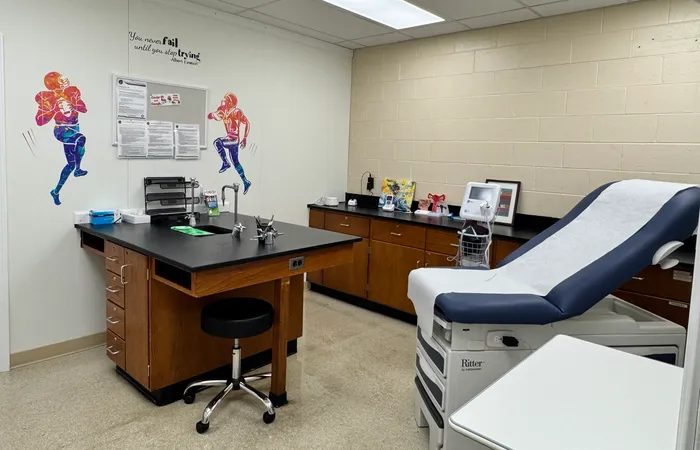
Exam tables, stools, counters, cabinet handles, light switches, dispensers and equipment surfaces should be disinfected between clean cycles, working from cleaner surfaces toward dirtier ones so contamination is not spread backwards. Colour-coded cloths for different zones are a simple, effective safeguard.
Restrooms
Full disinfection of all fixtures and touch points, restocking, and attention to the floor edges and the base of the toilet. Grout deserves periodic deep tile and grout cleaning, because staining there is what patients notice and routine mopping will not fix.
Labs, procedure and sterilisation areas
These rooms need clearly agreed boundaries. Some surfaces and equipment must only be handled by clinical staff. A good cleaning company will ask which areas are theirs and which are yours, and will put it in writing.
Staff and administrative areas
Break rooms, kitchens and back-office spaces are easy to under-serve, and they are exactly where staff eat and gather. They should be on the same schedule as the rest of the practice.
What about medical waste?
This is worth being clear about. Regulated medical waste, including sharps and biohazard containers, is handled by a licensed medical waste contractor, not by your janitorial team. A cleaning company that offers to take that away should be questioned.
What we handle is general waste, recycling, and the cleaning and disinfection of the surfaces and containers themselves.
Why does dwell time matter so much?
This is the single most common failing in medical cleaning, and it is invisible on an inspection.
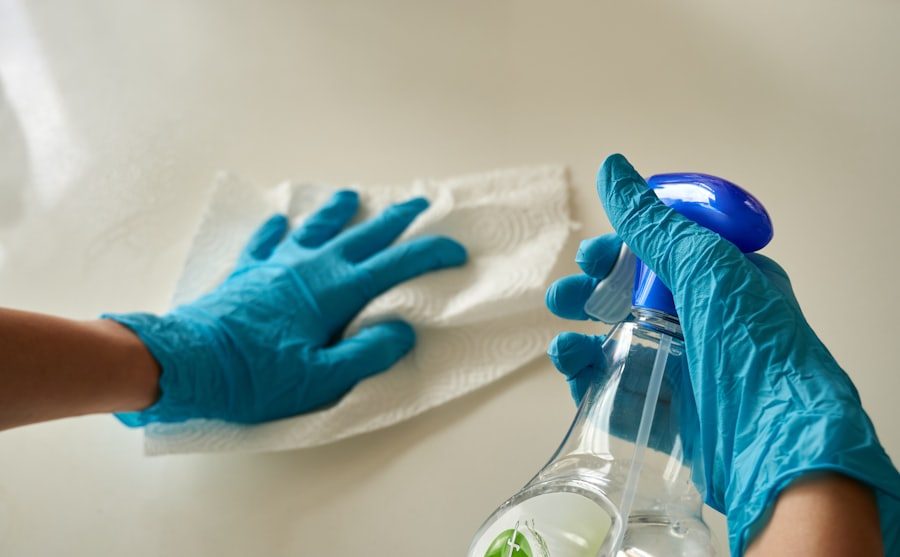
Every EPA-registered disinfectant has a contact time, meaning the surface must stay visibly wet for a specified period to actually kill what the label claims. Spraying and immediately wiping dry looks clean and achieves very little. Proper disinfection means applying the product, allowing the required dwell time, and only then finishing the surface.
If you take one question away from this article, ask a prospective vendor what the contact time is on the disinfectant they use. The answer tells you a great deal.
How often should a medical practice be cleaned?
Most outpatient practices in the Sandy Springs area are cleaned nightly, after patient hours. Higher-volume practices, urgent care and anywhere with procedure rooms often add a daytime porter to keep restrooms and waiting areas maintained through the day.
Deeper work runs on a longer cycle: carpet extraction and hard-floor restoration quarterly or twice yearly, depending on traffic. Practices with heavy footfall usually benefit from a written schedule that specifies both the nightly scope and the periodic work.
What should you ask before hiring a medical cleaning company?
- Can I see your certifications, and are they current?
- Are your staff background-checked, insured and HIPAA-aware?
- What disinfectants do you use, and what is the contact time?
- How do you prevent cross-contamination between rooms?
- Will we have the same crew each visit, and who supervises them?
- What exactly is included nightly, and what is periodic?
- How do we raise an issue, and how quickly is it resolved?
Any company worth hiring will answer these without hesitation.
Why Sandy Springs practices choose Starbiz
We are based in Sandy Springs and serve practices and businesses across Dunwoody, Brookhaven, Roswell, Chamblee, Vinings, Buckhead and Marietta. Our teams are trained, background-checked and fully insured, and we bring our own equipment and supplies.
We work after patient hours, we scope the work in writing so there is no ambiguity about what is covered, and we keep the same crew on your account wherever possible, because familiarity with a building is what produces consistency. Alongside medical work we provide office cleaning and janitorial programs for commercial clients throughout the Perimeter.
Final thoughts
Patients form an opinion of a practice in the waiting room, long before they meet a clinician. But the more important point is that clinical cleaning done properly is a genuine part of infection control, and done carelessly it is theatre.
Ask for the certificates. Ask about contact time. Ask who is actually walking through your building at night.
Looking for a medical cleaning partner? Starbiz Cleaning of Sandy Springs provides certified medical and commercial cleaning across Sandy Springs and North Atlanta. Request a free walkthrough or call (770) 524-1874 and we will scope your practice and give you a fixed monthly price.