Georgia schools are back and flu season is coming. Here is a practical six-week plan to get your Sandy Springs office ready, and the surfaces that actually matter.
Georgia schools went back weeks ago, and anyone with children knows what follows. The first coughs work their way through classrooms in August, reach households in September, and arrive at the office shortly after.
Flu activity in the United States typically begins climbing in October and peaks between December and February. That makes late summer the right moment to prepare, because the work that actually reduces transmission takes several weeks to put in place, not a weekend.
Here is a practical plan for offices around Sandy Springs and the Perimeter.
Why do offices spread illness so efficiently?
An office concentrates exactly the conditions germs need. Dozens of people share a small number of door handles, lift buttons, kitchen taps and printer panels. Air is recirculated. Meetings put people in one room for an hour. And in the Perimeter, a large share of staff arrive on MARTA or through shared parking decks and lobbies before they even reach your suite.
None of that is a reason for alarm. It simply means the shared surfaces in your building deserve more attention between October and February than they get the rest of the year.
How to prepare your office: a six-week plan
Weeks 1 and 2: audit what you actually have
Walk the office with fresh eyes and write down what you find:
- Are soap dispensers full, and do they all work?
- Is there hand sanitiser at the entrance, and is it actually where people walk?
- Are paper towels stocked, or does everyone use the same hand dryer?
- Do the kitchen and restroom bins have lids?
- When were the HVAC filters last changed?
- Are meeting rooms ventilated, or sealed boxes?
Most offices find three or four easy fixes in this walk alone.
Weeks 3 and 4: raise the cleaning standard
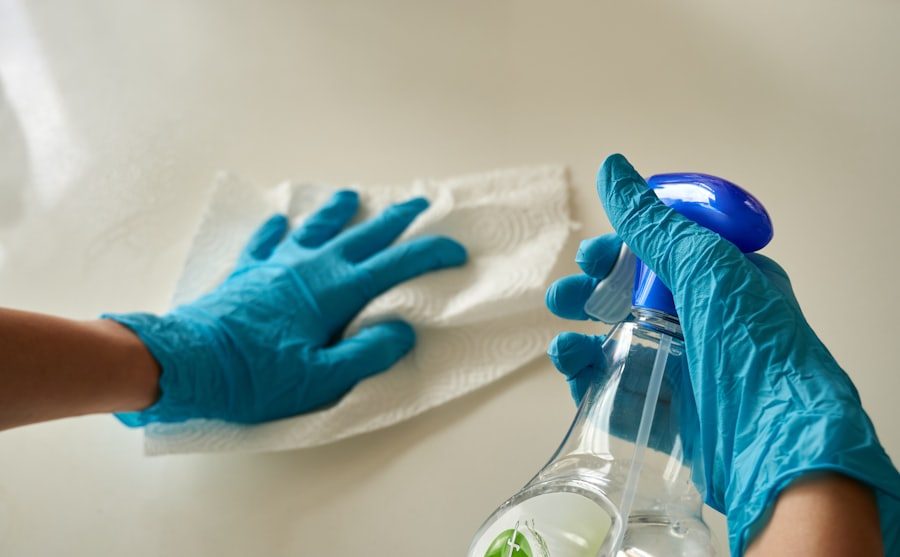
This is where the real gain is. Review your current cleaning scope and ask whether high-touch surfaces are being disinfected or merely wiped. If your janitorial scope has not been revisited in a year or two, this is the moment.
Agree in writing what changes for the season: which surfaces get disinfected, how often, and by whom. A seasonal scope that steps up between October and February and steps back down in spring is common and sensible.
Weeks 5 and 6: equip and inform your people
Put sanitiser where people already stop: entrances, lift lobbies, meeting rooms, the kitchen. Stock disinfectant wipes near shared equipment so staff can wipe a keyboard or a phone themselves. And make sure everyone knows the sick-day policy actually permits staying home, because one person working through it undoes a great deal of cleaning.
Which surfaces actually matter most?
Effort is better spent on a short list done properly than a long list done quickly. In most offices the highest-contact points are:
- Door handles and push plates, especially restroom and entrance doors
- Lift buttons and stair rails
- Shared keyboards, mice and desk phones
- Meeting room tables, chair arms and remote controls
- Kitchen taps, fridge and microwave handles, coffee machine buttons
- Printer and copier control panels
- Light switches and thermostat panels
- Reception counters and payment terminals
Notice how many of these are touched by every single person in the building on a normal day.
What is the difference between cleaning, sanitising and disinfecting?
These words get used interchangeably, and the difference matters when you are writing a scope of work.
- Cleaning removes visible dirt and grime. It does not claim to kill anything, but it matters because disinfectant cannot work properly through a layer of soil.
- Sanitising reduces bacteria to a level considered safe.
- Disinfecting uses a registered product to kill the organisms named on its label.
For flu season, the sequence is what counts: clean the surface first, then disinfect it. Disinfecting a dirty surface is largely wasted effort.
How often should high-touch surfaces be disinfected?
For a typical office during peak season, high-touch points benefit from daily disinfection, with restrooms and kitchens ideally serviced more than once a day in busier buildings. Desks and private equipment can stay on a normal schedule, since they are used by one person.
One detail decides whether any of it works: contact time. Every disinfectant label specifies how long the surface must stay visibly wet to achieve what the product claims. Spraying and immediately wiping dry looks clean and accomplishes very little. We covered this in more depth in our guide to medical office cleaning standards, and it applies just as much in a regular office.
What can you handle in-house, and what needs a professional?
Plenty is worth doing yourself. Keeping sanitiser stocked, providing wipes for personal equipment, encouraging people to clear desks so surfaces can actually be cleaned, and changing filters on schedule are all straightforward.
It is worth bringing in a professional team when you need:
- Consistent nightly office cleaning with a documented scope
- Proper disinfection using registered products at the correct contact time
- A daytime porter to maintain restrooms and common areas through peak season
- Carpet extraction and hard-floor work that traps and removes what vacuuming leaves behind
- Someone accountable for it happening every night, whether or not anyone is watching
When should you book?
September is when most facility managers in the area review their cleaning scope for the winter, so it is the busiest month for changes. If you want a revised programme running before flu activity picks up in October, start the conversation now rather than in November.
Why Sandy Springs businesses choose Starbiz
We are based in Sandy Springs and serve offices across Dunwoody, Brookhaven, Roswell, Chamblee, Vinings, Buckhead and Marietta. Our teams are trained, background-checked and fully insured, and hold IJCSA certification in bloodborne pathogens, chemical hazards and medical cleaning, plus OSHA HAZWOPER training.
We work after hours, scope the job in writing so nothing is ambiguous, and keep the same crew on your building because familiarity is what produces consistency. We also handle schools and daycares and full commercial programmes across the Perimeter.
Final thoughts
You cannot stop flu season. What you can control is how many shared surfaces in your building are carrying it from one person to the next, and that is largely a matter of scope, frequency and whether the work is actually done properly.
Six weeks is enough time to get ready. Starting in November is not.
Want your cleaning scope reviewed before winter? Starbiz Cleaning of Sandy Springs provides commercial cleaning and disinfection throughout Sandy Springs and North Atlanta. Request a free walkthrough or call (770) 524-1874 and we will put together a seasonal plan for your building.